
CAD · DESIGN · SIMULATION · MANUFACTURE
MISCELLANEOUS CAD
A collection of smaller engineering projects exploring mechanical design, reverse engineering, simulation and design for manufacture.
DESIGN ARCHIVE
Exploring engineering through smaller design challenges.
Alongside my larger engineering projects, I have completed a range of smaller CAD and design exercises across university coursework, personal projects and technical development.
These projects allowed me to explore different areas of mechanical engineering, from structural simulation and reverse engineering through to generative design and manufacturing.
01
DESIGN & MANUFACTURE
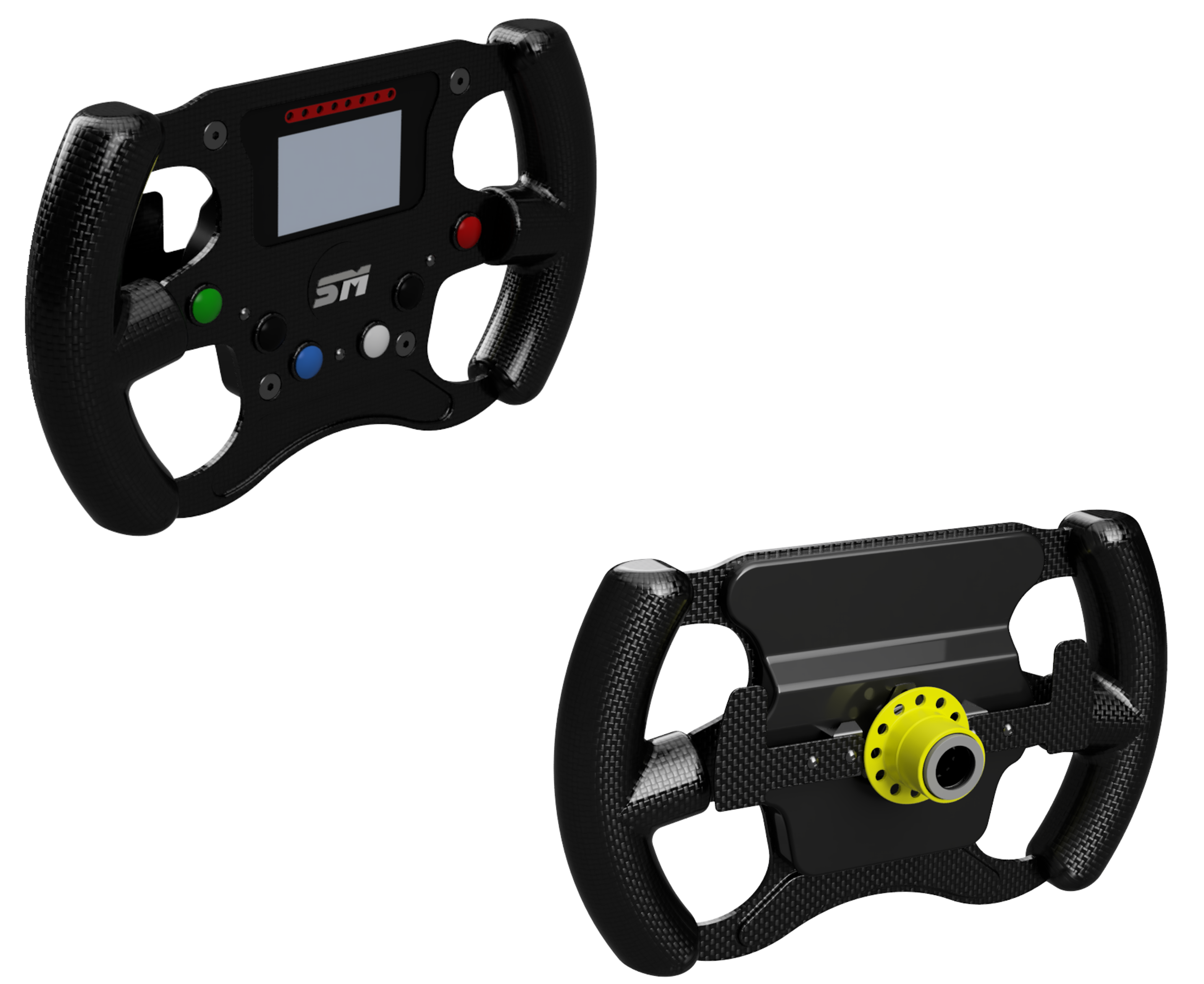
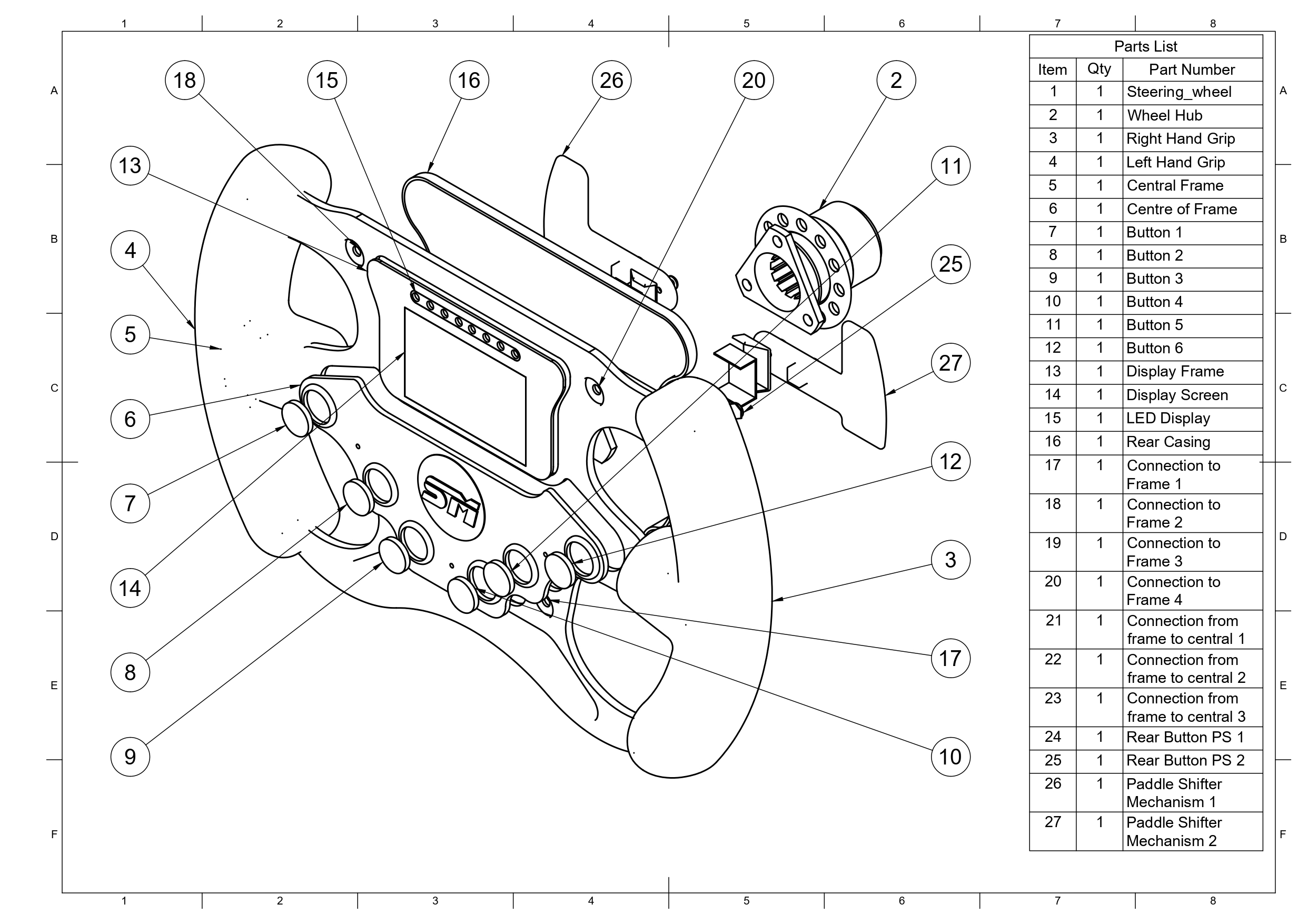
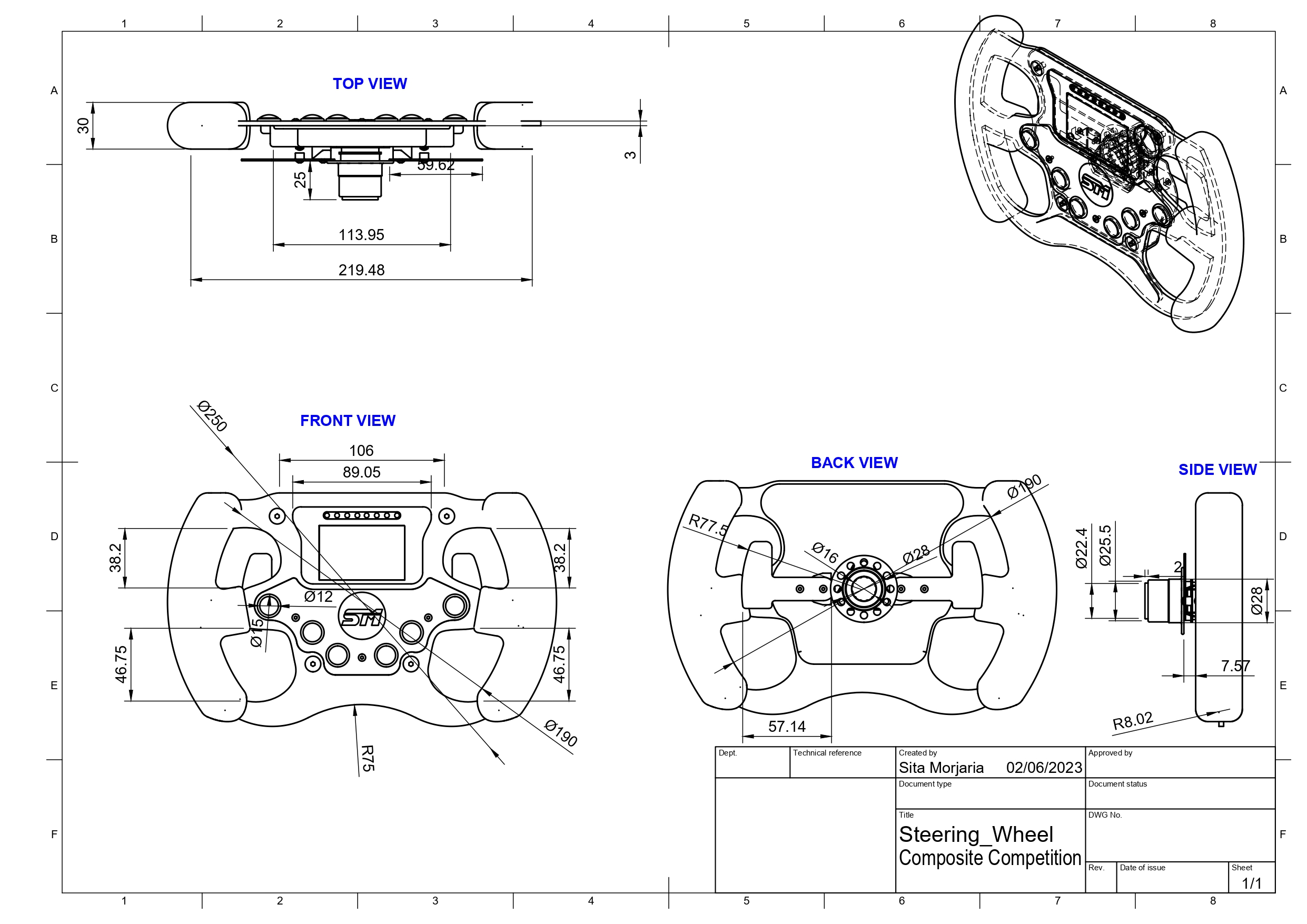
Steering Wheel
A personal project exploring the complete development of a steering wheel from ergonomic concept through detailed CAD and manufacturing considerations.
- Developed the steering-wheel geometry around ergonomic requirements.
- Investigated manufacturing methods for individual components.
- Considered integration of electrical controls and switches.
- Produced detailed component and assembly drawings.
- Developed the project with future manufacture in mind.
02
PERSONAL PROJECT
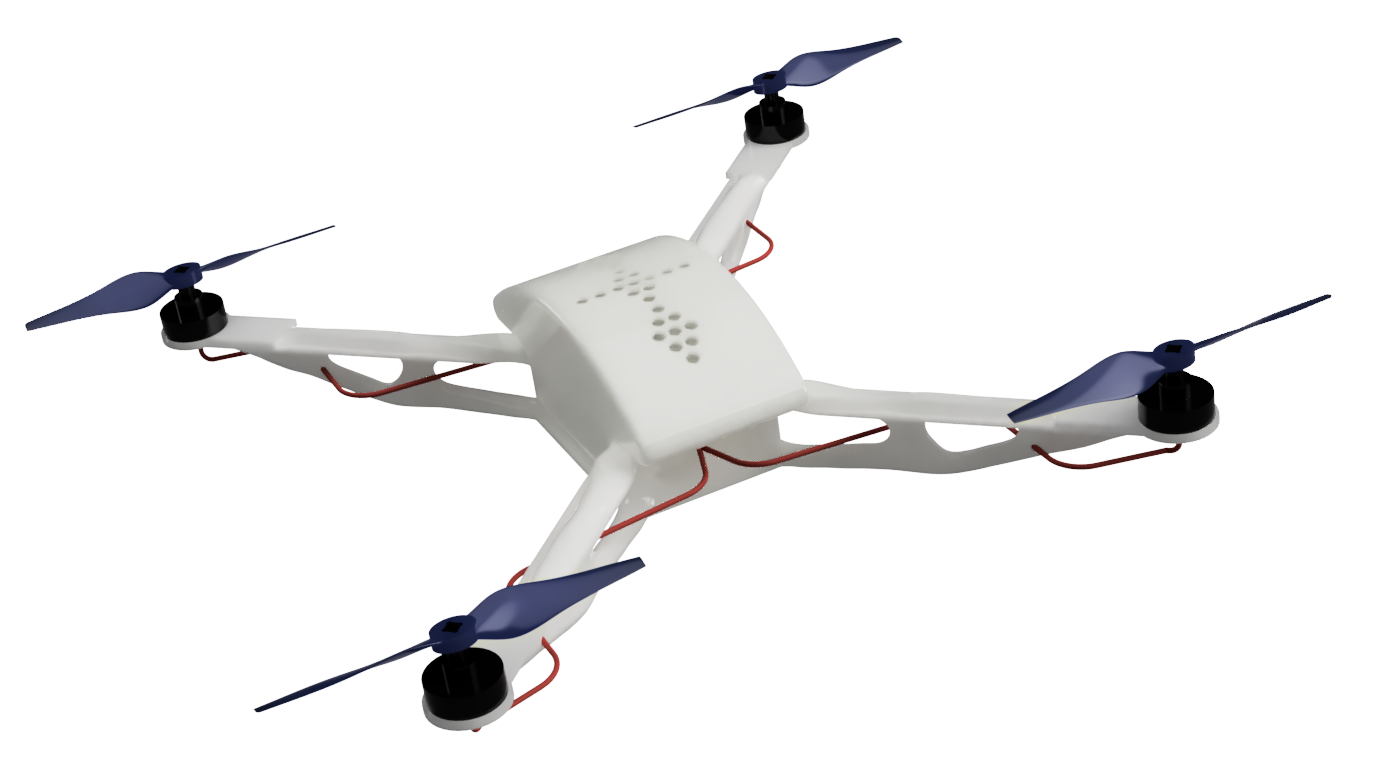
Generative Design Drone
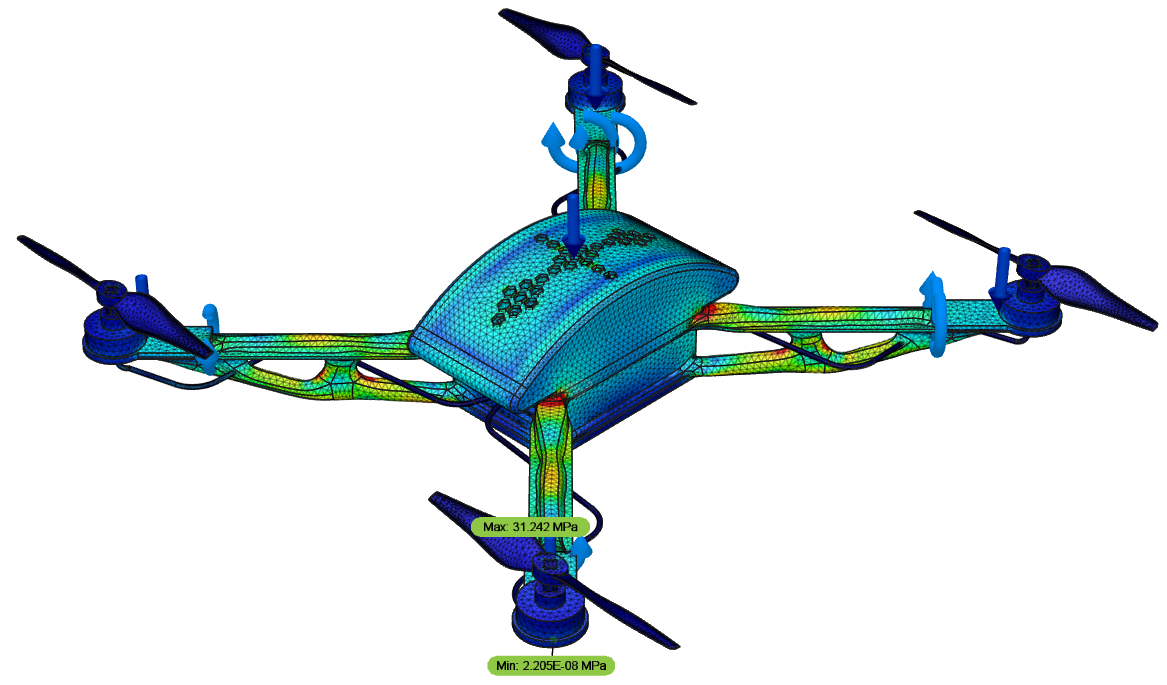
A personal design exercise exploring Autodesk Fusion 360's Generative Design workflow to develop a lightweight drone structure around defined loading and packaging requirements.
- Defined mechanical interfaces and design constraints.
- Created preserved and obstacle geometry for generative design.
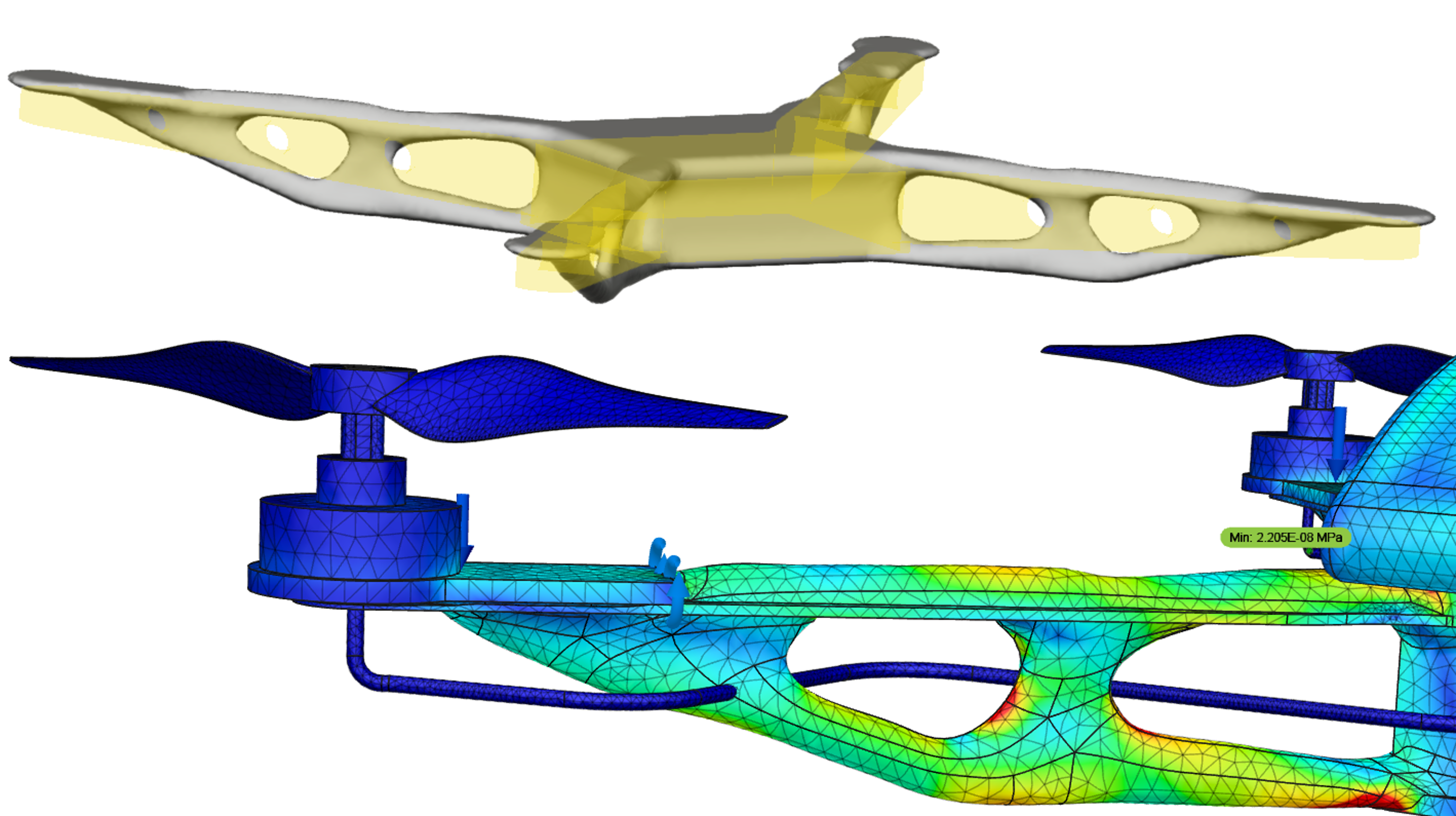
- Investigated lightweight structural solutions.
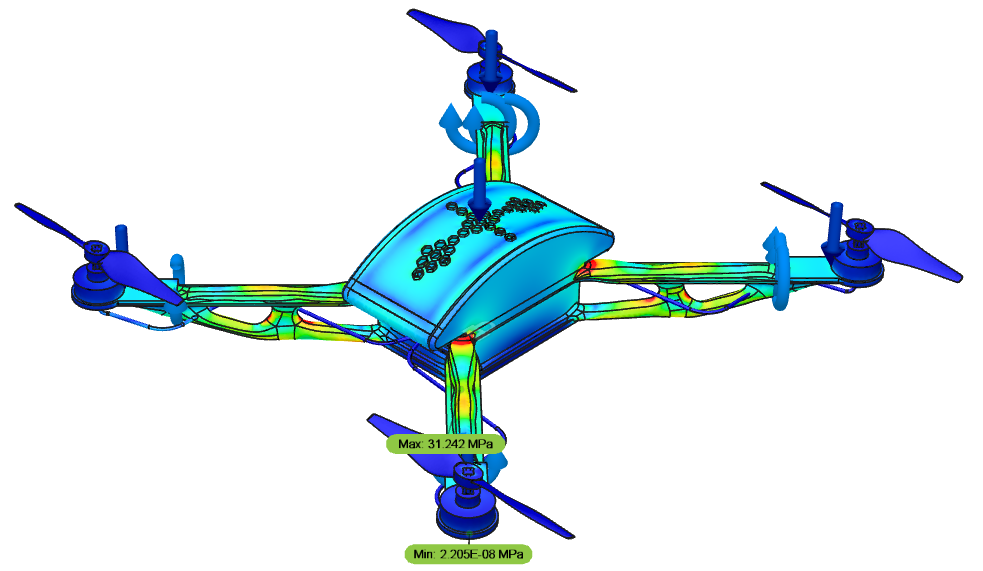
- Evaluated resulting geometry using finite element analysis.
- Refined the generated result into a complete drone concept.
SIMULATION
Structural Validation
Finite element analysis was used alongside the generative design process to investigate the structural behaviour of the resulting drone geometry.
03
MECHANICAL ENGINEERING DESIGN
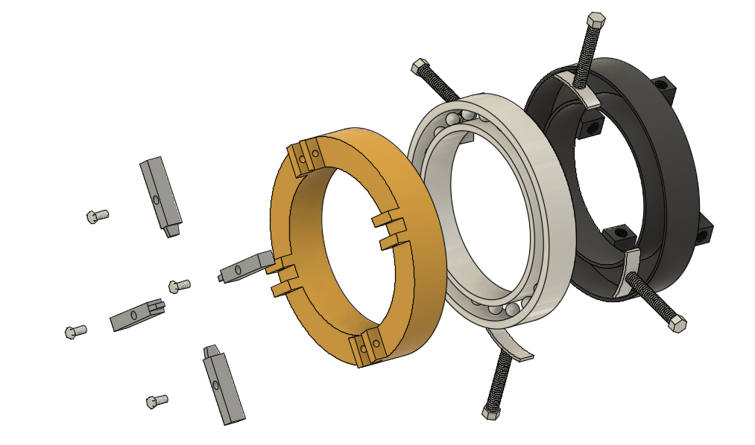
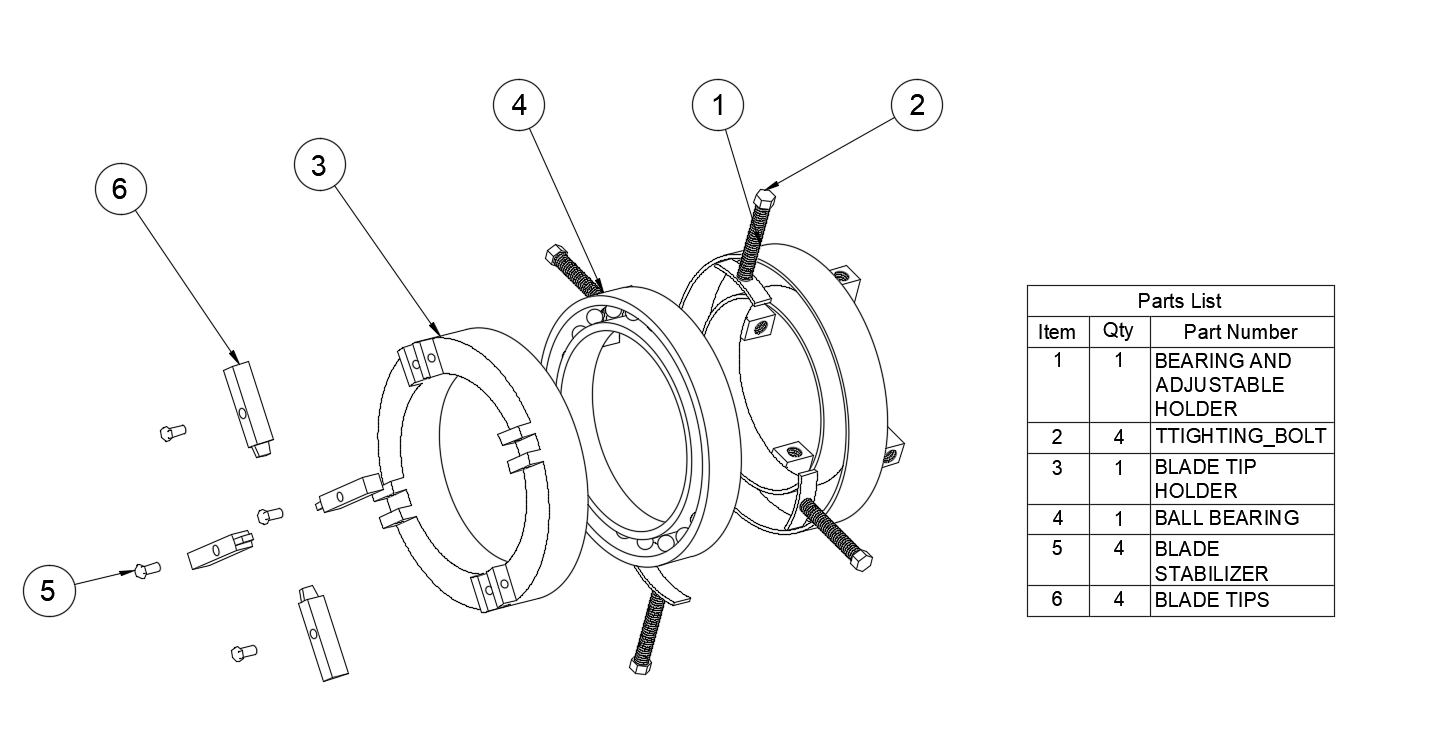
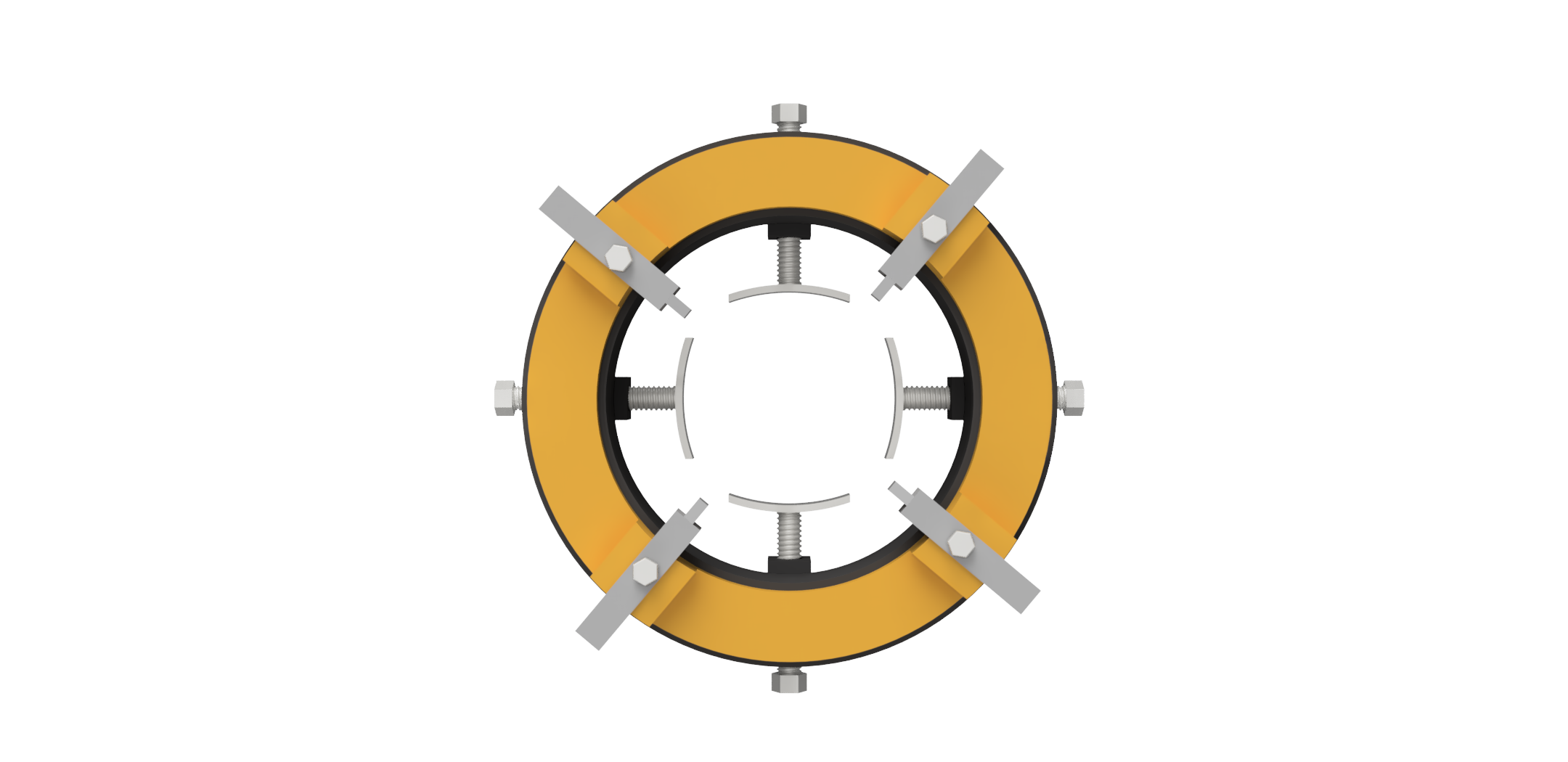
Carbon Fibre Rod Cutter
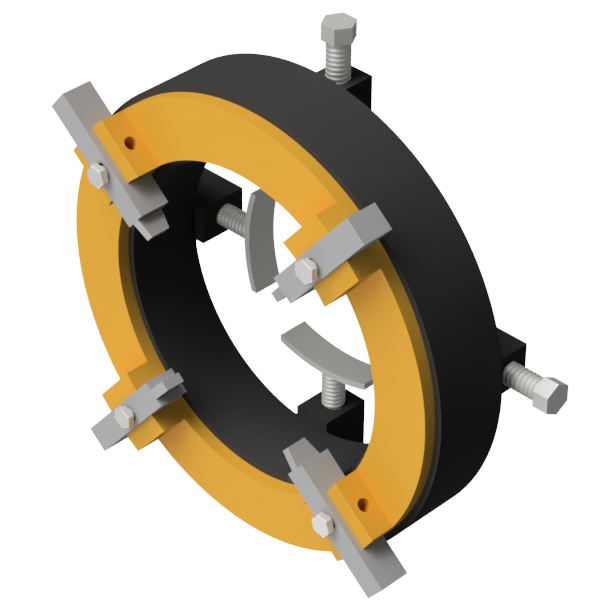
Developed as part of a mechanical engineering design module, the project focused on creating a carbon-fibre rod cutting mechanism capable of producing repeatable and accurately dimensioned components.
- Led responsibility for the CAD development.
- Developed the mechanism around practical component availability.
- Incorporated 3D-printed components and standardised hardware.
- Produced exploded assemblies and component documentation.
- Considered ease of manufacture, assembly and operation.
04
REVERSE ENGINEERING
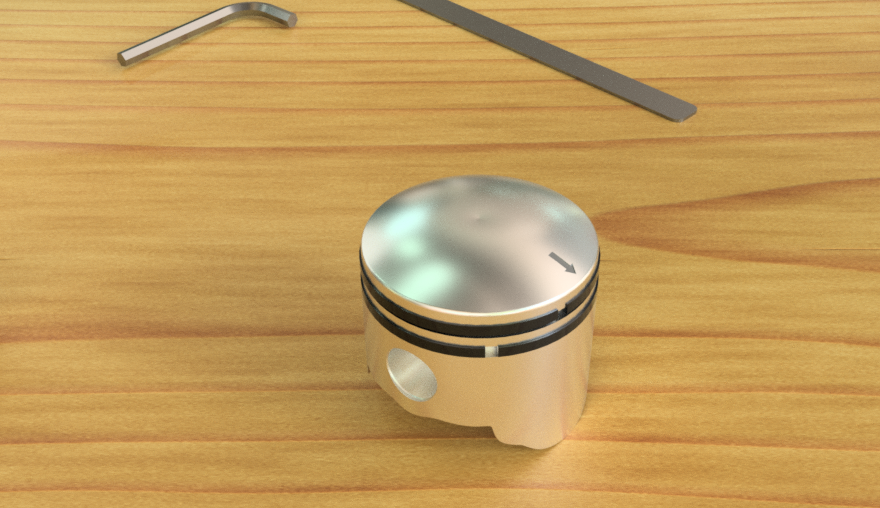
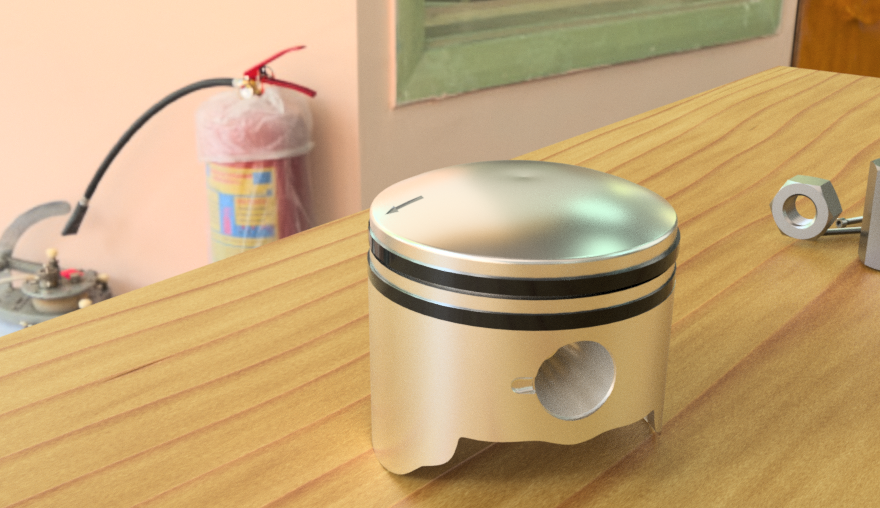
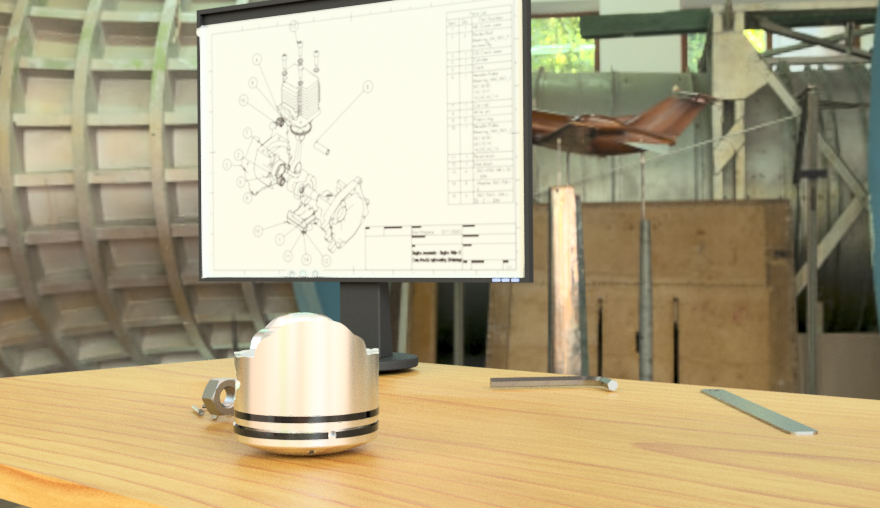
Two-Stroke Engine Piston
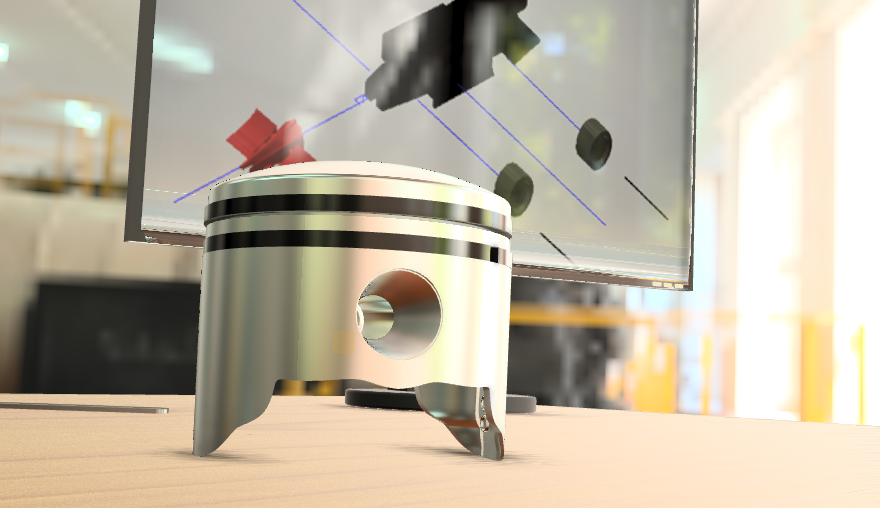
A reverse-engineering exercise focused on reproducing an existing two-stroke engine piston using physical measurements and detailed CAD development.
- Reverse engineered geometry from a physical component.
- Used vernier measurements to define key dimensions.
- Developed the piston as a controlled parametric CAD model.
- Refined complex features including ring grooves and internal geometry.
- Produced presentation-quality renders of the completed component.
05
CIVIL DESIGN SPRINT
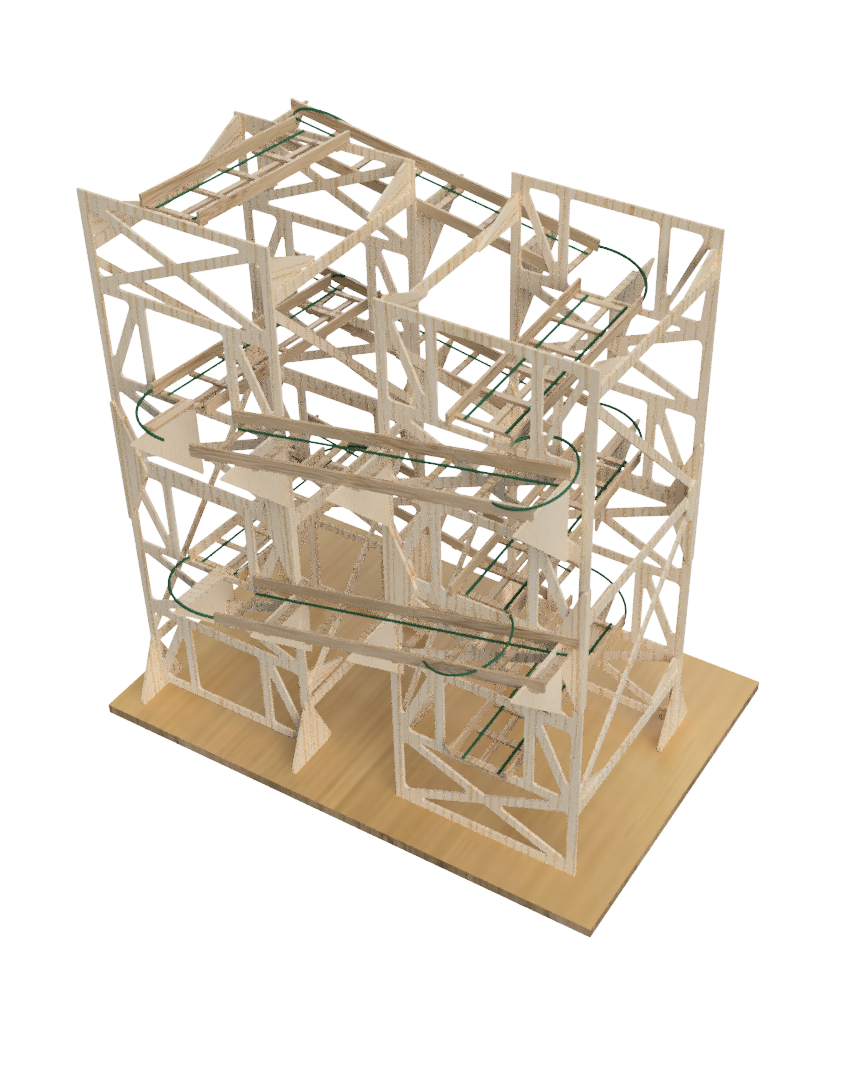
Model Roller Coaster
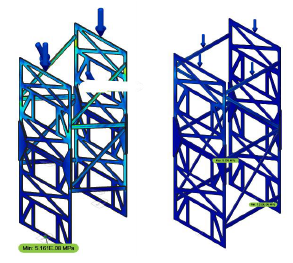
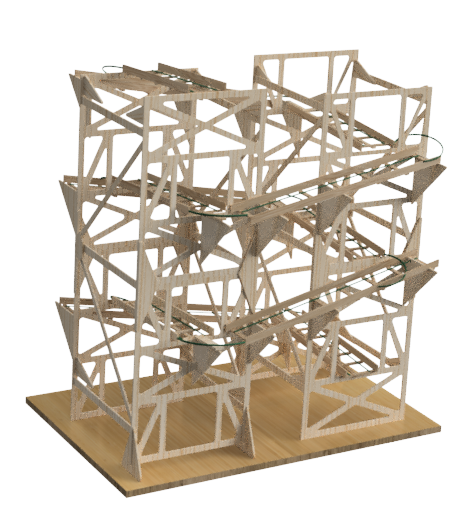
A multidisciplinary design sprint focused on developing a functional roller-coaster structure manufactured from balsa wood whilst analaysing load paths and fail criteria and managing both material usage and manufacturing constraints.
- Developed the complete supporting structure in CAD.
- Designed around dimensional and material constraints.
- Investigated structural behaviour using FEA principles.
- Generated cutting documentation and assembly information.
- Considered manufacturing efficiency and material optimisation.
06
MANUFACTURING PROCESS DEVELOPMENT
Carbon Fibre Cooling Fixture
During an engineering internship, I gained experience in the high-volume manufacture of carbon-fibre components and investigated how differential cooling could influence component geometry after moulding.
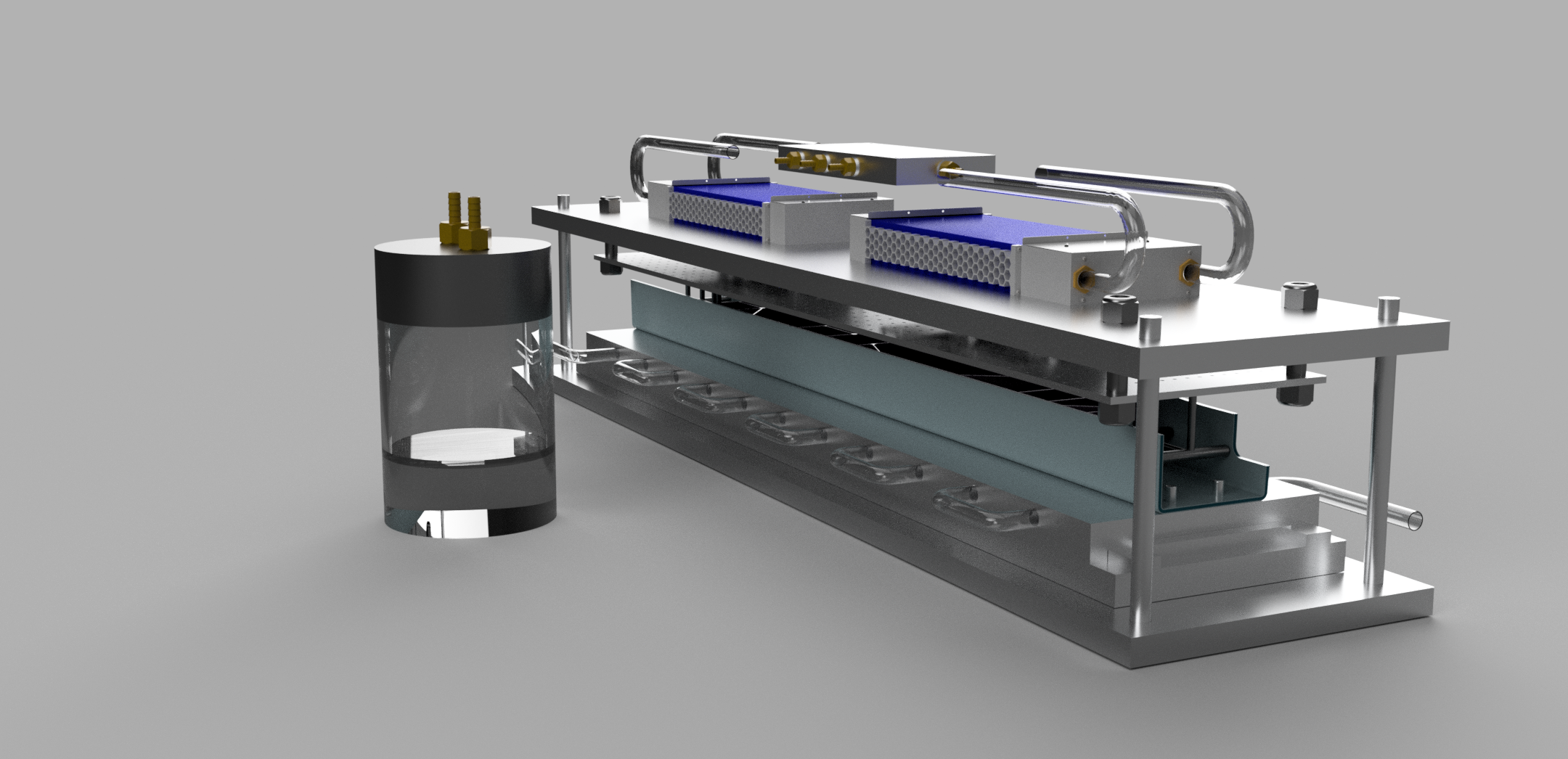
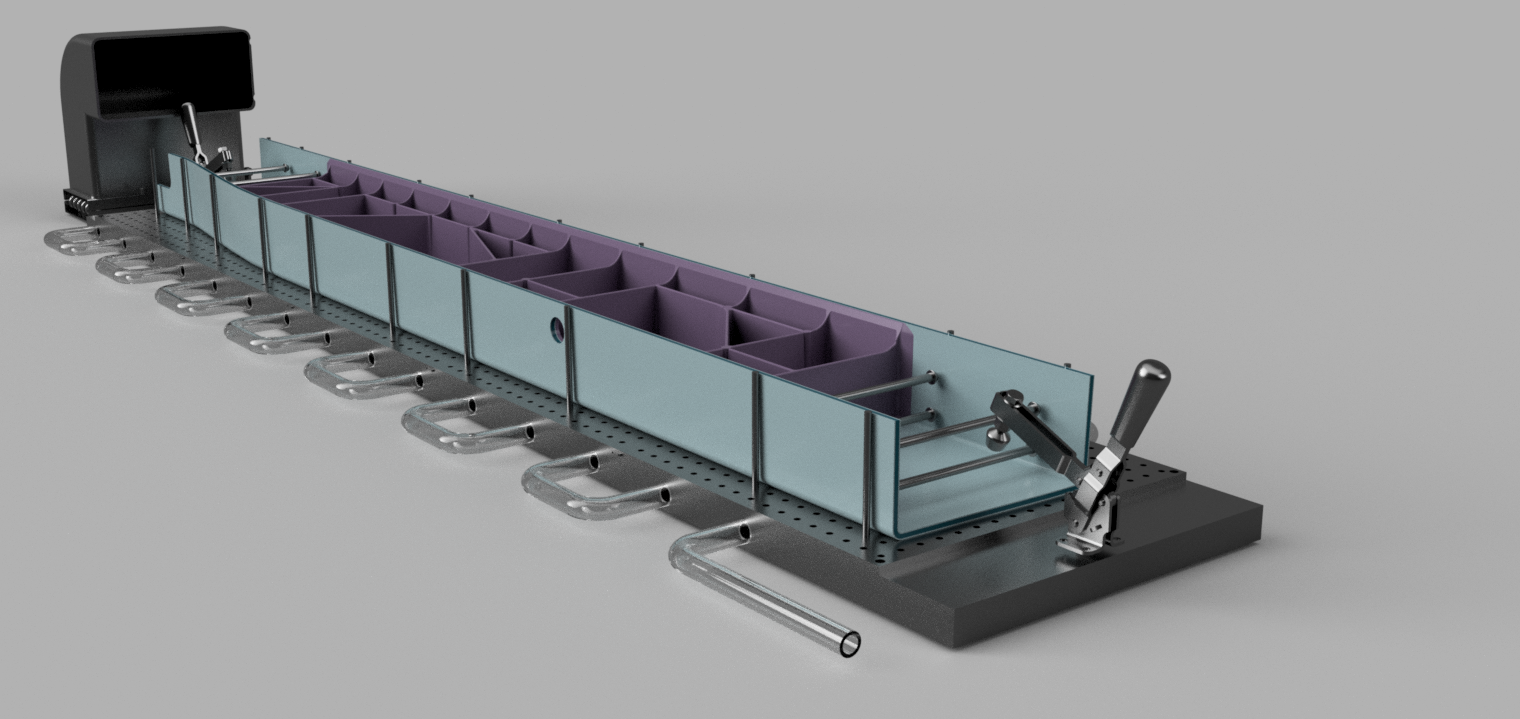
My primary task was to develop a dedicated cooling fixture designed to control the cooling process and reduce dimensional variation within the component.
- Designed a bespoke fixture for cooling co-moulded carbon-fibre components.
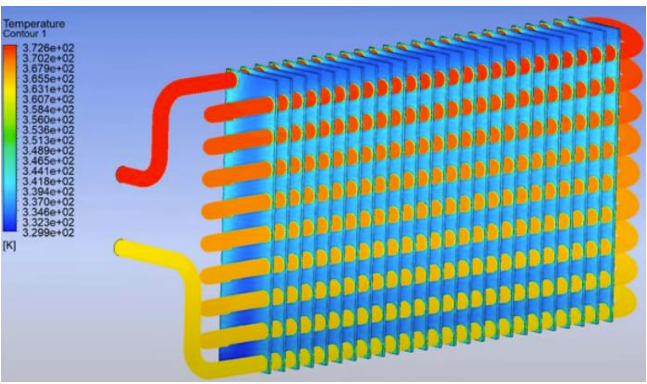
- Investigated differential cooling behaviour using thermal simulation.
- Used simulation results to identify appropriate cooling locations.
- Developed the fixture geometry around the manufacturing process and component packaging requirements.
- Considered how controlled cooling could improve dimensional consistency after moulding.
DESIGN DEVELOPMENT
Building breadth through different engineering problems.
These smaller projects allowed me to develop a broader approach to mechanical design by applying CAD to very different engineering problems.
Across the projects, I developed experience in reverse engineering, simulation, design for manufacture, generative design and technical documentation while continuing to improve the quality and robustness of my CAD models.